
My Studio
All of the pendants I make feature a stone cabachon that is formed by hand. There is no "tumbling" involved in my work. I acquire all my material through several different markets.
1. Rock and gem shows 2. Websites and Facebook 3. Rockhounding
I use a combination of lapidary and jewelry making tools to create the items I sell at markets and online. I mostly search for material I have yet to work with or material that is popular (Amethyst, Labradorite etc.) I look for interesting patterns and vivid colors that will translate to an eye-catching piece. I also have a huge selection of rock purchased over several years I have yet to use. I mostly purchase rock that has already been cut into 1/4" - 3/8" thick slabs but also can cut smaller rock into slabs myself. Anything bigger than 4" requires a larger lapidary saw to cut into slabs.
Pendant making process
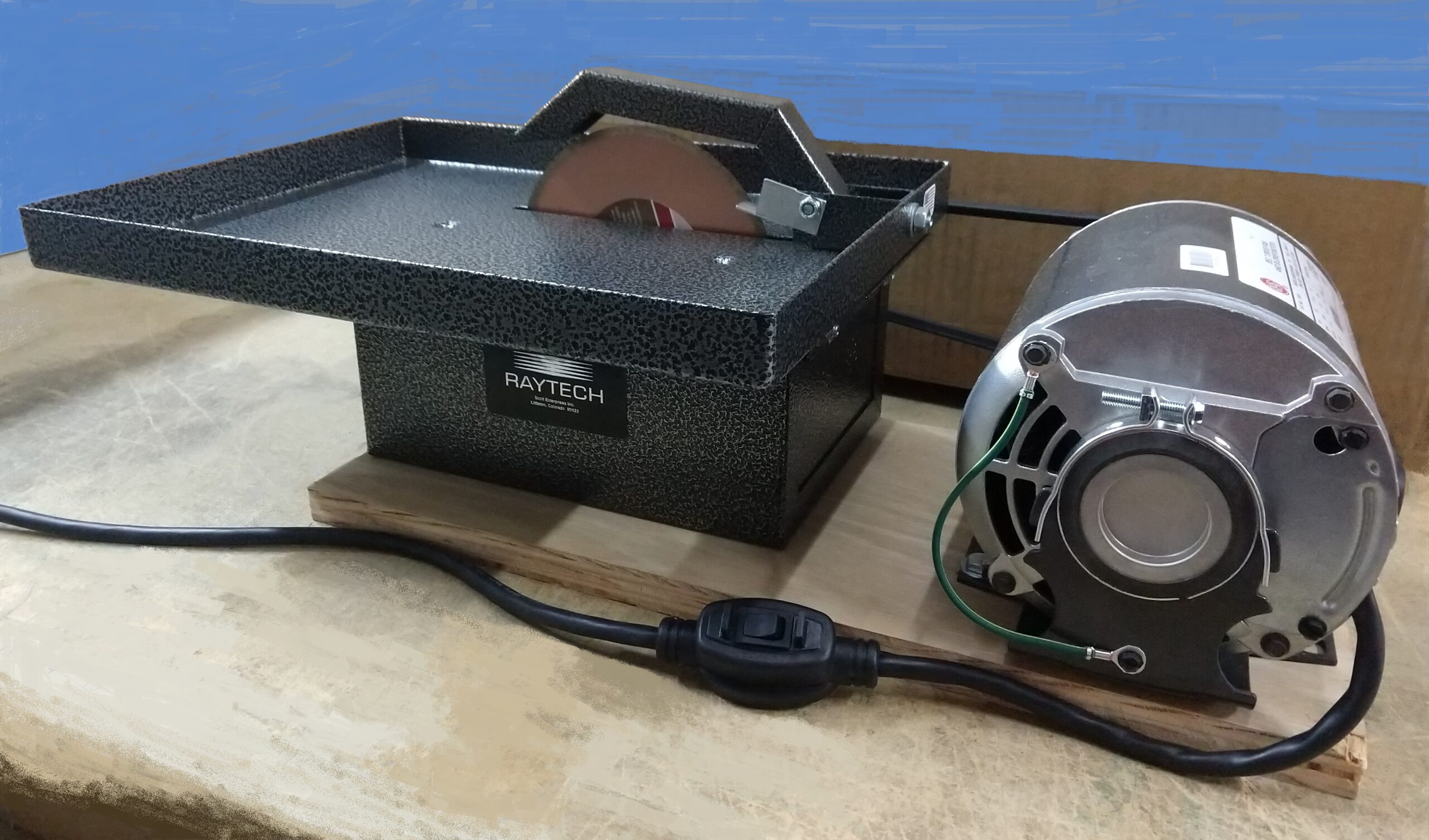
A slab of stone or other material is selected to draw cabachon shapes on and then cut them out using a 6" lapidary trim wet saw. Saws of this type use a blade that cuts with friction and water to cool the stone and blade (although one can use mineral oil as well). They are similar to a ceramic tile saw and use the same type of blade. Some rocks require a very thin blade to cut the stone to prevent breakage. I select enough material to create 10-15 cabachons. Once all the shapes are cut and trimed, they move on to the grinding process.
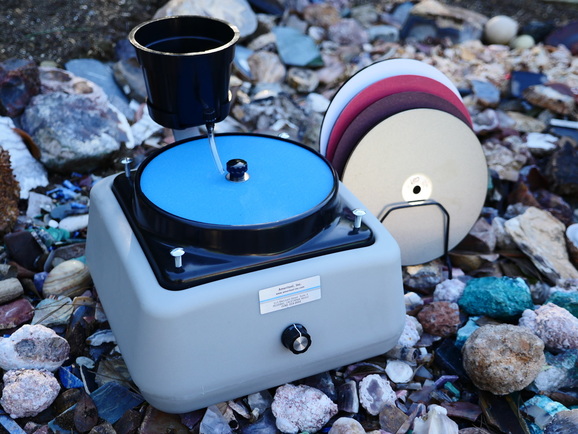
The cabachons are shaped and polished using a Flat Lap. This machine uses flat round disks imbedded with diamonds and water. Each disk has a specific grit. Starting with an 80 grit hard disk, I grind and shape the cabachons in stages. 10-15 cabachons are shaped at 80 grit and then move up to a 200 grit hard disk. Then I move up to colored smoothing disks that are part epoxy and diamond grit. These help smooth out imperfections until the rock has a nice smooth surface for polishing. By the time each cabachon is ready for polishing, I have moved from 250 grit to 3000 grit. Each cabachon is then polished on the same flat lap using either a leather disk or a felt disk and cerium oxide, a polish compound generally used for glass. Other types of compounds such as tin oxide are also used. Different compounds work better with certain rocks.
Each cabachon is checked for scratches and other defects and if neccesary the process of grinding and polishing is repeated until the cabachon passes inspection. It generally takes 10-12 hours for me to complete the 10-15 cabachons. I keep up to 50-100 completed cabachons on hand so that I can create more pendants by demand.